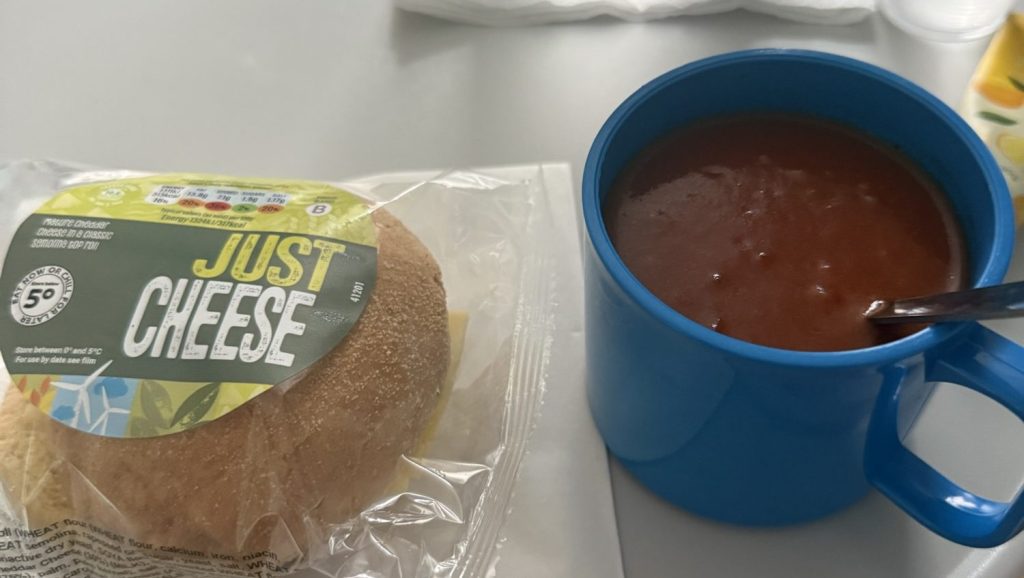
British hospital food has long been the butt of jokes. I haven’t exactly helped, having rated the breakfasts here in earlier posts.
On Saturday, based on the previous couple of days, I reduced my expectations slightly for the breakfast by omitting the Bucks Fizz. That was a good move on my part, because today’s breakfast was worthy of a ⭐️ ⭐️ ⭐️ ⭐️ ⭐️ review. Piping hot coffee, black without sugar – as I prefer, was served in a mug around an hour before the breakfast trolley came around. Then fresh orange juice, cornflakes with ice cold milk, and a fruit yoghurt completed the repast. There were plenty of cereal options, including hot Ready Brek, with fresh fruit and toast if required. Nothing fancy, just plain and simple fare to start the day.
Breakfast is often described as the most important meal of the day. I am not a dietician, but I am sure there would be something to tempt even the most disinterested patient to start their day well.
I have also learnt that mealtimes are predictable on this ward: Breakfast at 8am; Lunch as the main meal of the day, around midday; and Supper, around 5pm.
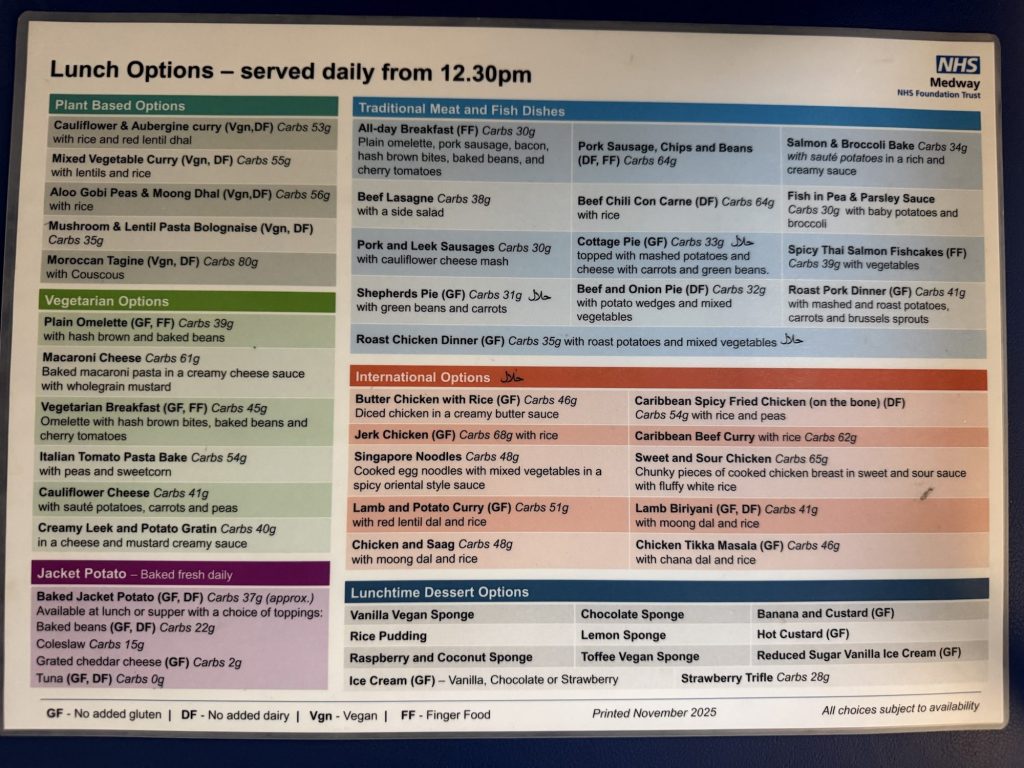
The menu in my room is a double sided A2 laminate sheet with a range of options, and an information panel explaining that, as we age, forgetfulness or illness, reduced mobility, or difficulty speaking can make us less interested in food and drink, or simply make eating and drinking more difficult. We might need help preparing, eating, and drinking. However, getting enough to eat remains vital for energy, recovery, and overall health – sometimes we need even more nutrients than before.
The “Lunch” menu includes plenty of vegan and vegetarian options, along with a range of ‘Traditional Meat and Fish Dishes’ and ‘International Options’, followed by a range of lunchtime dessert choices if desired. Many of the dishes are tagged with GF for no added gluten, DF for no added dairy, Vgn for Vegan and FF for Finger Food.
There are just four FFs on the Lunch menu, and they all include baked beans with various combinations of plain omelette, pork sausage, bacon, hash brown bites, cherry tomatoes and chips. I have to admit, I have never tried eating baked beans with my fingers, so I initially looked at these with a little incredulity until I found myself wondering who these meals were actually designed for. Perhaps someone recovering from a stroke, someone living with arthritis, someone who is frail or confused, or someone who has simply lost their appetite. Being able to pick up food with your fingers could make the difference between eating independently and needing help.
I began to realise that hospital food is not simply about offering a choice of meals. It is about recognising that every patient arriving on a ward brings a different story, a different need, and a different relationship with food.
For some, a hot meal served on a tray is just that – a meal. For others, it may represent a small step towards independence: choosing what they want, feeding themselves, and regaining a little control at a time when so much has been taken from them.
I have been fortunate. My appetite has returned, and I can choose from the menu without needing any special adjustments. But spending time in a hospital has made me more aware of those who do need extra support.
A meal is never just a meal when you are unwell. Sometimes it is another small step on the road back.

Leave a comment